


 Back
Back This article focuses on the importance of healthy habits for wellbeing. The article provides useful tips and information regarding physical wellbeing, diet, responsible alcohol use, exercise and sleep.
Background
When you start university, you will encounter many new experiences. Some you will enjoy, others you may not. Adapting to a new environment can be challenging to some students. This article focuses on how to build the foundations of emotional balance and mental wellbeing. It will guide you through making a plan to make small changes that can increase your emotional resilience (ability to adapt to stressful situations) and mental wellbeing.
How could this affect me?
You may be looking forward to living away from home and building your independence or it may feel like a very daunting task, or a mix of both. All the above are normal and understandable. It may be that you are looking forward to learning in depth about your chosen subject and hoping that you may find some like-minded people at University.
Whatever it is that has brought you to University, those early weeks are likely to bring up many different emotions, both positive and negative. Common challenges can include:
Social aspects
- Uncertainty about what will happen or what is expected of you
- Feeling under pressure to socialise
- Not knowing what to say to people or how to start a conversation
- Anxiety around forming new friendships
- Learning to live with other people
Sensory considerations
- Other people’s noise, tidiness, hygiene
- Possible environmental triggers to sensory overload – halls of residence, lecture theatres, cafeteria
Cognitive overload
- Feeling overwhelmed by reading lists or workload
- All the new experiences and information that you are taking in can be exhausting
Practical considerations
- Learning to look after yourself including your physical and mental health
- Making appointments
- Being responsible for your finances
- Using public transport
- Disruption of previous daily routines and the development of new university routines
- Learning your way around a new city or campus
- Uncertainty about timetabling and where you are meant to be
- Managing deadlines
- Working in groups
You may wish to book in to see one of our accessibility advisers before the start of your first term at university. If this is something you would like, please contact us:
- Email: StudentWellbeing@herts.ac.uk
- Phone: 01707 284453
What to do next?
Register with your local GP surgery as soon as possible
Practical tips
What to do if your are feeling unwell at university?
Before the start of term, you may want to consider the following questions:
- If you are living on campus, you may wish to register with the University’s Medical Centre: Medical Centre | Ask Herts | University of Hertfordshire
- You may wish to look into the university’s absence policies if you are on a Tier 4 student visa: Absence procedure for students with a Student Route visa | Ask Herts | University of Hertfordshire
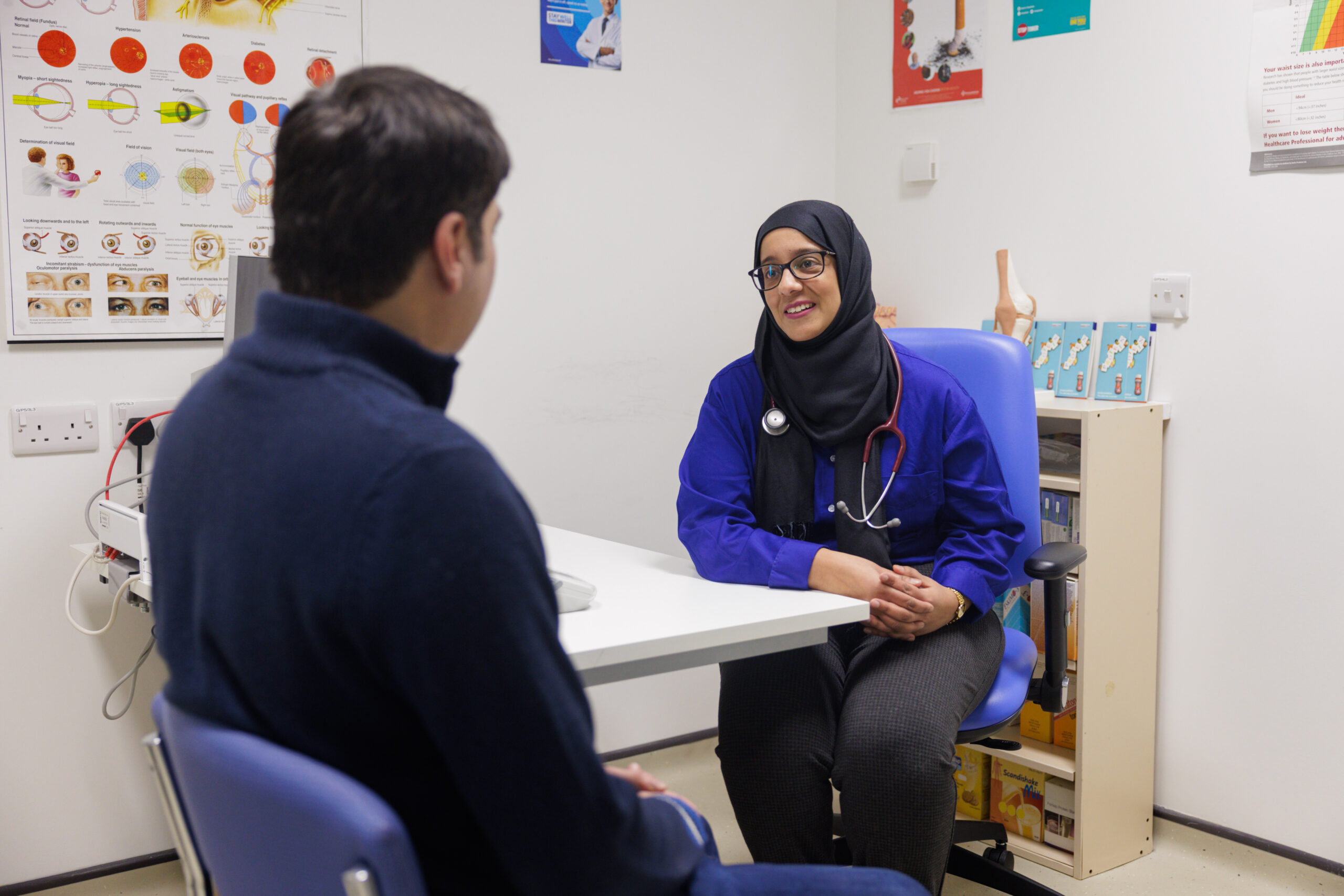
Questions to think about
Physical illness
Before you get ill you may want to consider the following questions:
- Do you think you need any adjustments regarding timing of appointments?
- How you would like the GP surgery to communicate with you?
- Would you need to see the same clinician every time?
- Are you comfortable making appointments on the phone or would you rather make them online?
Once you have the answers to these questions, contact the GP surgery and ask them to make any necessary adjustments. You can ask for a key named contact person who will navigate the system for you.
Balanced eating
A balanced diet requires planning as you need to allow time both for shopping and cooking, so you need to allow time for this in your timetable. Here are some questions you may want to think about regarding your preferences:
- Do you think it would work better for you to devote one day (e.g. Sunday) to shop and cook for the week or do you think it would be better for you to introduce cooking as a daily routine at the end of each day?
- Which vegetables and fruit do you most like? Can you find recipes that include them? In what other ways can you include them in your diet?
- Have you considered sharing cooking with your housemates? It can be cheaper and also a good way to share the load.
Responsible alcohol use
Think about the situations in which you may find yourself tempted to drink more than you would like to:
- Do you find it more comfortable to go out in small groups or larger groups ?
- What sort of places you find easier to go to?
- Do you like loud places or quiet places, bright lights or gentle lighting?
Once you know what makes things more comfortable for you, think about how you can explain this to housemates or new friends. It may feel hard to explain this to others, but most people want the people they are with to feel happy and have a good time.
Balanced sleep
Before you start at university, it may be helpful to think about your bedtime routine at home and what helps you to sleep well. Once you have a clear idea of what works for you, then the next stage is to think how you can replicate this at university. Are there things that you can bring with you from to help with the transition to university?
If you are going to share with others, think about what kind of agreement you could ask for in relation to noise levels and set quiet periods overnight. You may need to compromise to find something that works for everyone.
Exercise
It is sometimes hard to get into a routine to exercise regularly. Here are some things you may want to think about to get you started:
- Do you like team sports or group classes or do you prefer to exercise on your own?
- Do you enjoy outdoors or prefer a gym?
- If you are not one for active sports, have you considered merely walking? Try walking to university a longer way, if possible including nature trails, at east 3 times a week.
- Looking at your weekly timetable, are there any slots between lectures you could use to exercise, even if for short periods?
Additional information
Physical illness
- Making the most of your visit to the GP: A guide for those on the autistic spectrum
- National Autistic Society – Hospital passport and guidance
Balanced eating
- You can find information here about the link between diet and mental health, and what you need to watch out for here.
- There are many websites where you can find healthy and easy recipes: Brain boosting recipes, recipes for students, healthy recipes for students, cheap and easy recipes.
- Here is a helpful app from the NHS called Easy Meals.
Responsible alcohol use
- If you are worried about your own, or others’ drinking habits, you can find advice and support here.
Sleep
- This link gives advice on how to set up a good bedtime routine.
- Smiling Mind is a free mindfulness meditation resource and once you have registered, you can use all the resources. There is a module on sleep. You can find it here.
- This app gives relaxing melodies to aid sleep: Relaxing melodies app for iPhone and for Google Play.
Exercise
- The Mental Health Foundation has an article outlining the benefits of exercise and gives some ideas about how to start it. You can find it here.
About the author
This article was prepared by Dr Abigail Tolland, a clinical psychologist working in the University of Portsmouth’s Student Wellbeing Service.